The 'Tsunami' Trick: How to Remember 9 Kanji with the Reading TSU (つ)
Why do 次 (Next), 亜 (Asia), 通 (Pass), 付 (Attach), 点 (Point), 注 (Pour), 使 (Use), 仕 (Doing), and 連 (Take Along) all feature a Tsunami in Shibashi? Because Tsunami = つ!
Kun'yomi and On'yomi readings starting with つ (tsu) — like つぎ (next), つく (attach / turn on), とおる / つう (pass through), つかう (use), つかえる (serve), and つれる (take along) — appear on every single JLPT level. In Shibashi, the syllable つ (tsu) is anchored by a giant _Tsu_nami (つ) wave!
Quick Comparison: 次 (Next) vs. 亜 (Asia) vs. 通 (Pass Through) vs. 付 (Attach)
See how the Tsunami wave links 9 essential App Kanjis:
| Kanji & Meaning | Primary Readings (Bold = Primary) | Shibashi Visual Mnemonic Hook | Common Compound Word |
|---|---|---|---|
| 次 — Next | On: じ, し Kun: つ |
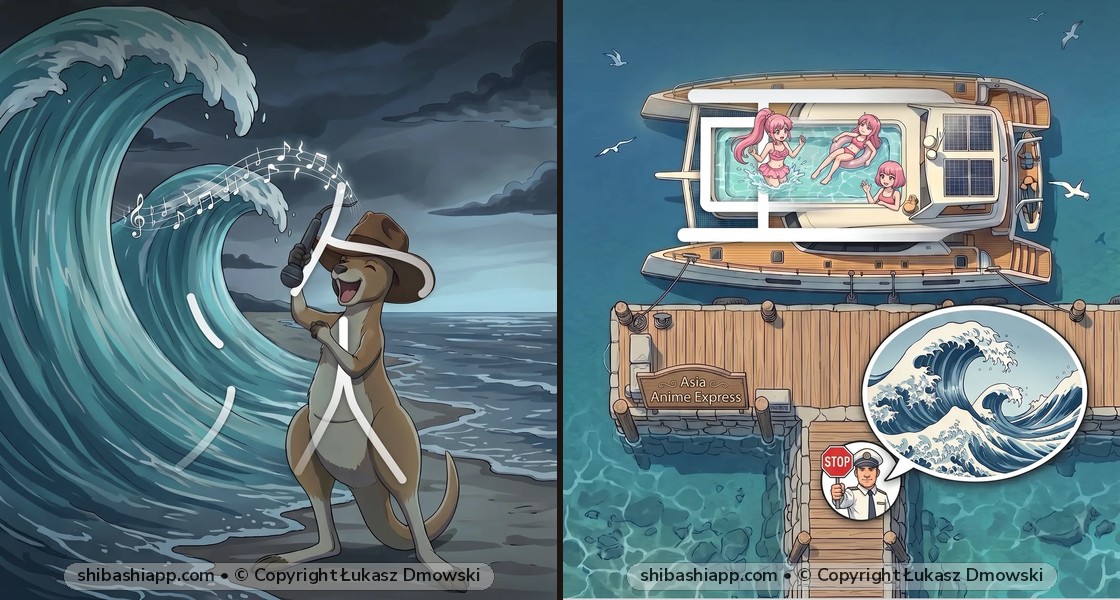
Two drops + singing kangaroo (欠) facing a _tsu_nami (つ) = Next (つぎ / じ) | 目次 (もくじ) — table of contents |
| 亜 — Asia | On: あ Kun: つ |
Catamaran hull facing a _tsu_nami (つ) on the _a_nime (あ) express = Asia | 東亜 (とうあ) — East Asia; the Orient |
| 通 — Pass Through | On: つう Kun: とお, かよ |
Scooter (辶) + Coyote Fence = Pass Through (つう / とお) | 通る (とおる) — to go through |
| 付 — Attach | On: ふ Kun: つ |
Person (亻) + Mailpost (寸) = Attach (つ / ふ) | 付く (つく) — to be attached |
| 点 — Point | On: てん Kun: つ |
Fortune booth (占) + 4 fire sparks (灬) at _ten_ (てん) before a _tsu_nami (つ) = Point | 点 (てん) — point, dot |
| 注 — Pour | On: ちゅう Kun: つ |
Water (氵) + Master (主) = Pour / Focus (そそ / ちゅう / つ) | 注意 (ちゅうい) — caution |
| 使 — Use | On: し Kun: つか |
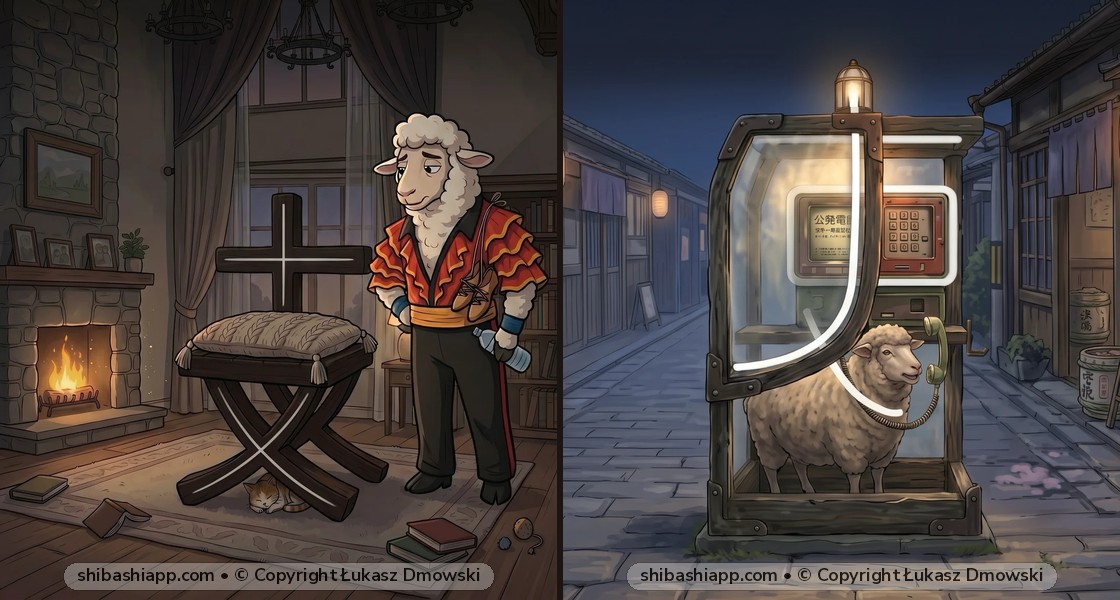
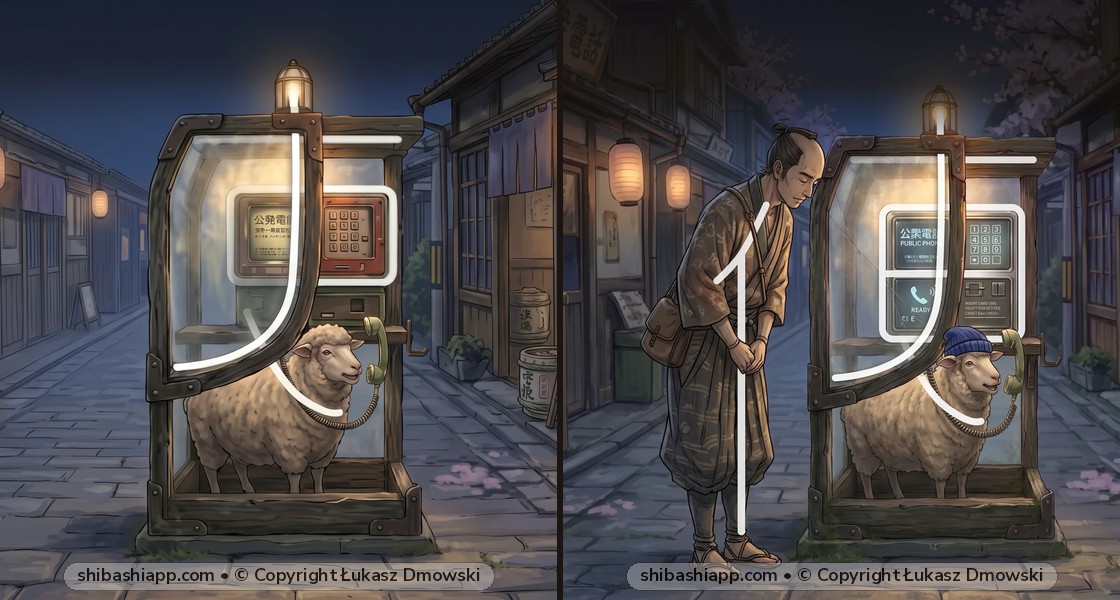
Person (亻) + Payphone (史) = Use (つか / し) | 大使館 (たいしかん) — embassy |
| 仕 — Serve, Do | On: し Kun: つか |
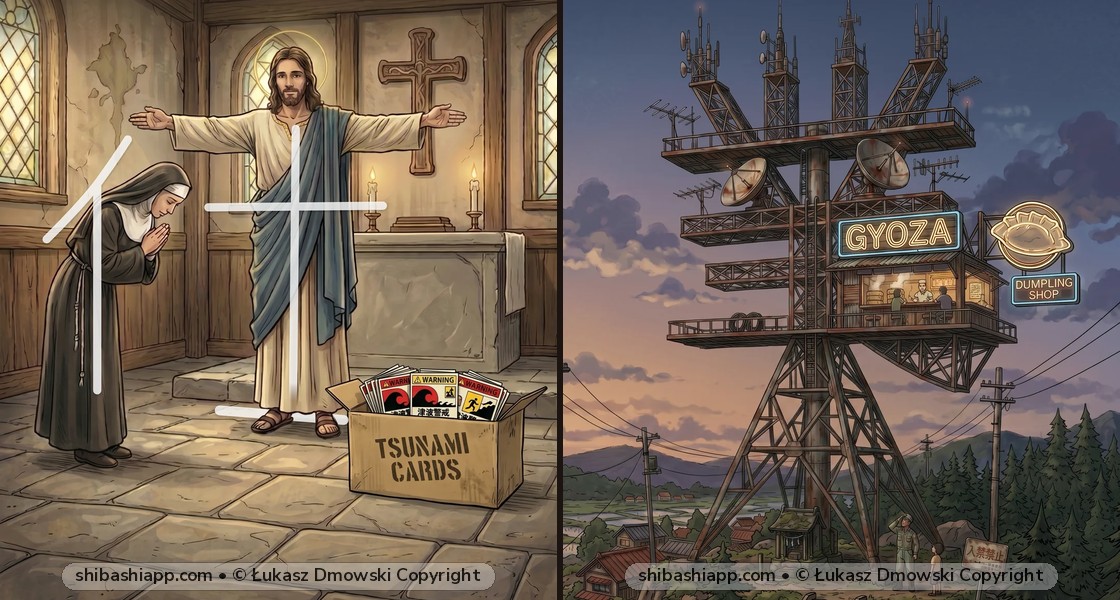
Person (亻) + Samurai (士) facing a _tsu_nami (つか) = Doing / Serve (し) | 仕方 (しかた) — method |
| 連 — Take Along | On: れん Kun: つ, つら |
Scooter (辶) + Car (車) = Take Along / Connect (つ / れん) | 連れる (つれる) — to take along; to accompany |
Illustrated Kanji Flashcards(Tap Readings for Audio)
In 次 (じ / し / つ — Next), without a shield (し), a _tsu_nami (つ) wave may end the kangaroo, but in his *next* life he'll be a genie (じ)! In 亜 (あ / つ — Asia), a _tsu_nami (つ) approaches the _a_nime (あ) *Asia* express catamaran. And in 通 (つう / とお — Pass Through), 付 (ふ / つ — Attach), 点 (てん / つ — Point / Turn on), 使 (し / つか — Use), 仕 (し / つか — Doing/Serve), and 連 (れん / つ — Take Along), the tsunami cue immediately gives you the tsu reading!


Essential Japanese Vocabulary Words Using 次 / 亜 / 通 / 付
Once you can recognize 次 (Next) and 亜 (Asia) and 通 (Pass Through) individually, lock them into your active reading vocabulary with these high-frequency Japanese words from the Shibashi app:
| Japanese Word | Hiragana Reading | English Meaning | Level |
|---|---|---|---|
| 目次 | もくじ | table of contents | JLPT |
| 東亜 | とうあ | East Asia; the Orient | JLPT |
| 通る | とおる | to go through | JLPT |
| 交通 | こうつう | traffic, transportation | JLPT |
| 通う | かよう | to commute | JLPT |
| 付く | つく | to be attached | JLPT |
| 付ける | つける | to attach, to join, to add, to append | JLPT |
| 点 | てん | point, dot | JLPT |
5-Second Memory Summary: How to Never Mix Up 次 & 亜 & 通 Again
Whenever you see a Tsunami wave in a Shibashi card, the reading starts with つ (tsu)!