4 Essential JLPT N4 Words Radical (言) Kanji: 説 (Explain 説明), 試 (Test 試験), 記 (Diary 日記) & 計 (Plan/Clock 時計)
Once you know 言 (Say),话 (Talk), and 語 (Language), the next four Words-radical kanjis you need for JLPT N4 are 説 (Explain), 試 (Test / Try), 記 (Write Down / Diary), and 計 (Measure / Plan)!
Look at how logical the right-hand components are in these four high-frequency JLPT N4 characters: counting words (言) up to ten (十) is 計 (Measure / Plan — 時計 tokei 'watch/clock', 計画 keikaku 'plan'), while writing words (言) to oneself (己) is 記 (Record — 日記 nikki 'diary')!
Quick Comparison: 説 (Theory) vs. 試 (Try) vs. 記 (Write Down) vs. 計 (Measure)
Compare the right-hand components of all four N4 speech-radical kanjis below:
| Kanji & Meaning | Primary Readings (Bold = Primary) | Shibashi Visual Mnemonic Hook | Common Compound Word |
|---|---|---|---|
| 説 — Theory | On: せつ Kun: と |
言 (Words) + 兌 (happy older brother with horns) = using clear words to EXPLAIN / THEORY (setsu / toku, as in 説明 setsumei). | 説明 (せつめい) — explanation; exposition |
| 試 — Try | On: し Kun: こころ, ため |
言 (Words/Questions) + 式 (Ceremony/Standard formula) = testing against a standard = TEST / TRY (kokoromiru / tamesu / shi, as in 試験 shiken). | 試し (ためし) — trial, test |
| 記 — Write Down | On: き Kun: しる |
言 (Words) + 己 (Oneself) = writing down words for yourself to remember = RECORD / DIARY / ARTICLE (shirusu / ki, as in 日記 nikki). | 記入 (きにゅう) — entry, filling in of forms |
| 計 — Measure | On: けい Kun: はか |
言 (Counted words) + 十 (Ten — counting from 1 to 10) = MEASURE / PLAN / TOTAL (hakaru / kei, as in 時計 tokei 'clock/watch'). | 計画 (けいかく) — to plan |
Side-by-Side Illustrated Kanji Flashcards (Tap Readings for Audio)
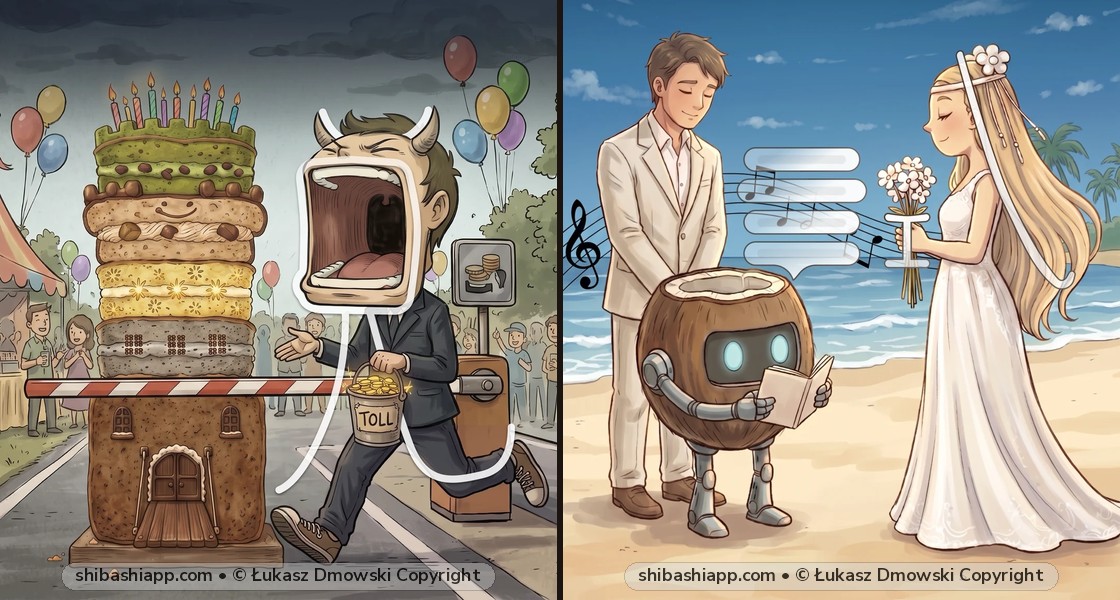
Compare the custom Shibashi artwork for 説 (Theory) and 試 (Try) below. Notice how each illustration embeds both the English meaning and the primary Japanese reading directly into the scene, and tap any reading to hear native pronunciation:


Step-by-Step Visual Breakdown & Radical Rules
Look at what sits to the right of 言 (Words) in each character:
1. 説 (Theory) — Mnemonic Story & Readings
On'yomi: せつ | Kun'yomi: と
Shibashi Visual Story: “In theory your birthday cake is free but somehow your evil brother in a set suit (せつ ) is still charging a toll (と)...” Key visual distinction: 言 (Words) + 兌 (happy older brother with horns) = using clear words to EXPLAIN / THEORY (setsu / toku, as in 説明 setsumei).
- 説明 (せつめい): explanation; exposition
- 小説 (しょうせつ): novel; story
- 説 (せつ): theory; doctrine; view
2. 試 (Try) — Mnemonic Story & Readings
On'yomi: し | Kun'yomi: こころ, ため
Shibashi Visual Story: “She (し) is trying to focus while a coconut robot (こころ) is reading her wedding vows, and a tacy melody (ため) is playing...” Key visual distinction: 言 (Words/Questions) + 式 (Ceremony/Standard formula) = testing against a standard = TEST / TRY (kokoromiru / tamesu / shi, as in 試験 shiken).
3. 記 (Write Down) — Mnemonic Story & Readings
On'yomi: き | Kun'yomi: しる
Shibashi Visual Story: “When the king (き) tells you how to sheer(u) (しる) sheep, don't just kneel, write down what you hear!” Key visual distinction: 言 (Words) + 己 (Oneself) = writing down words for yourself to remember = RECORD / DIARY / ARTICLE (shirusu / ki, as in 日記 nikki).
4. 計 (Measure) — Mnemonic Story & Readings
On'yomi: けい | Kun'yomi: はか
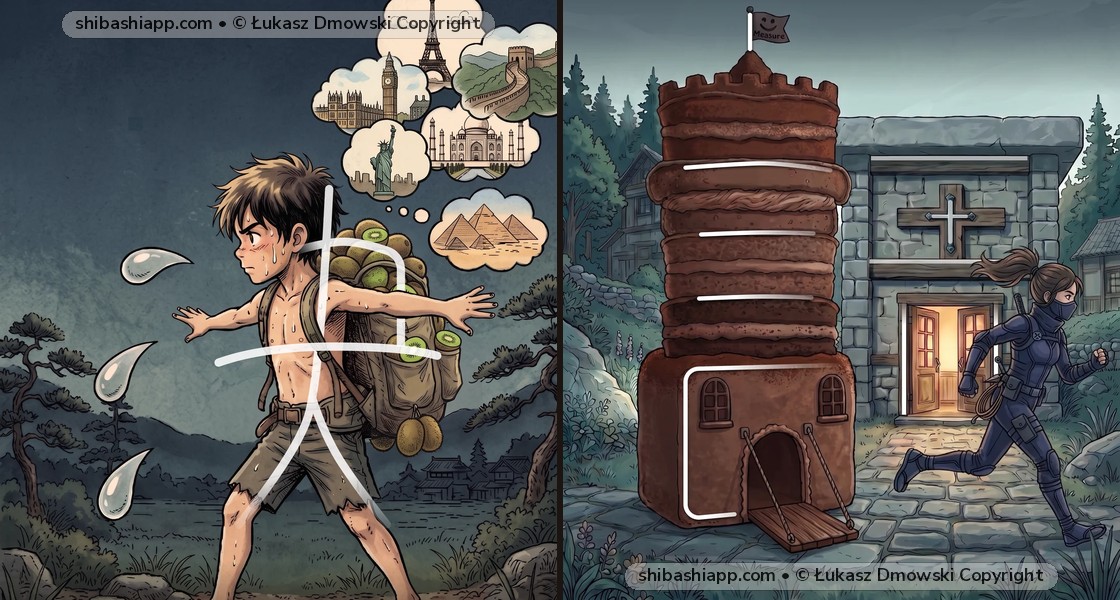
Shibashi Visual Story: “The happy castle (はか) cake (けい) is so tall it needs a special scale to measure it.” Key visual distinction: 言 (Counted words) + 十 (Ten — counting from 1 to 10) = MEASURE / PLAN / TOTAL (hakaru / kei, as in 時計 tokei 'clock/watch').
Essential Japanese Vocabulary Words Using 説 / 試 / 記 / 計
Once you can recognize 説 (Theory) and 試 (Try) and 記 (Write Down) individually, lock them into your active reading vocabulary with these high-frequency Japanese words from the Shibashi app:
| Japanese Word | Hiragana Reading | English Meaning | Level |
|---|---|---|---|
| 説明 | せつめい | explanation; exposition | JLPT |
| 小説 | しょうせつ | novel; story | JLPT |
| 説 | せつ | theory; doctrine; view | JLPT |
| 試し | ためし | trial, test | JLPT |
| 試す | ためす | to attempt, to test | JLPT |
| 記入 | きにゅう | entry, filling in of forms | JLPT |
| 記者 | きしゃ | reporter | JLPT |
| 計画 | けいかく | to plan | JLPT |
5-Second Memory Summary: How to Never Mix Up 説 & 試 & 記 Again
Spot 言 (Words) on the left: + 十 (Ten) = 計 (Measure / Clock 時計 tokei / Plan 計画 keikaku); + 己 (Self) = 記 (Record / Diary 日記 nikki); + 式 (Standard) = 試 (Test / Try — 試験 shiken, 試合 shiai); + 兌 (Brother) = 説 (Explain — 説明 setsumei, 小説 shōsetsu 'novel')!