Why 習 (Learn / Practice) Has Wings on Top: Mastering 羽 (Feathers), 習 (Narau), 白 (White) & 曜 (Weekday)
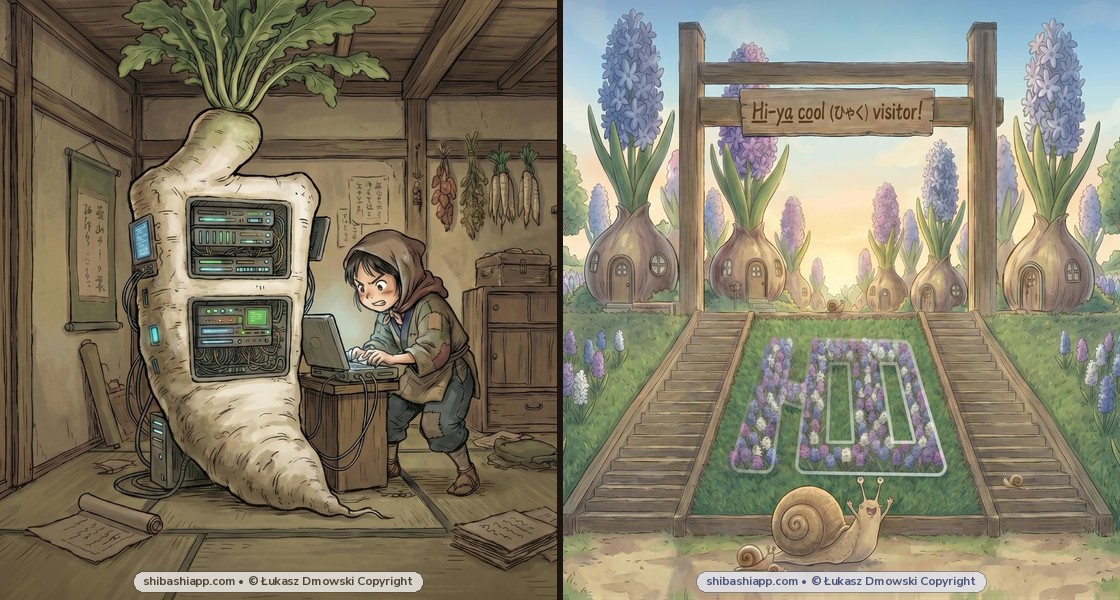
Look at the top of 習 (Learn / Practice): those two symmetrical shapes are 羽 (Feathers / Bird Wings)! A young white dove (白) flapping its wings (羽) over and over until it can fly is the ancient metaphor for practicing a skill.
Students constantly ask: What is the difference between 学ぶ (manabu) and 習う (narau)? The kanjis themselves give you the answer! 学 (manabu) is academic study in a schoolhouse, while 習 (narau) is a fledgling white bird (白) flapping its wings (羽) repeatedly to master a hands-on skill!
Quick Comparison: 羽 (Feather) vs. 習 (Learn) vs. 白 (White) vs. 曜 (Weekday)
Compare 羽 (Feathers/Wings), 習 (Practice/Learn), 白 (White), and 曜 (Weekday) below:
| Kanji & Meaning | Primary Readings (Bold = Primary) | Shibashi Visual Mnemonic Hook | Common Compound Word |
|---|---|---|---|
| 羽 — Feather | On: — Kun: はね, は, わ |
Two symmetrical bird wings with feather ticks side-by-side = FEATHERS / WINGS / BIRD COUNTER (hane / wa). | 羽 (はね) — feather, wing, plume |
| 習 — Learn | On: しゅう Kun: なら |
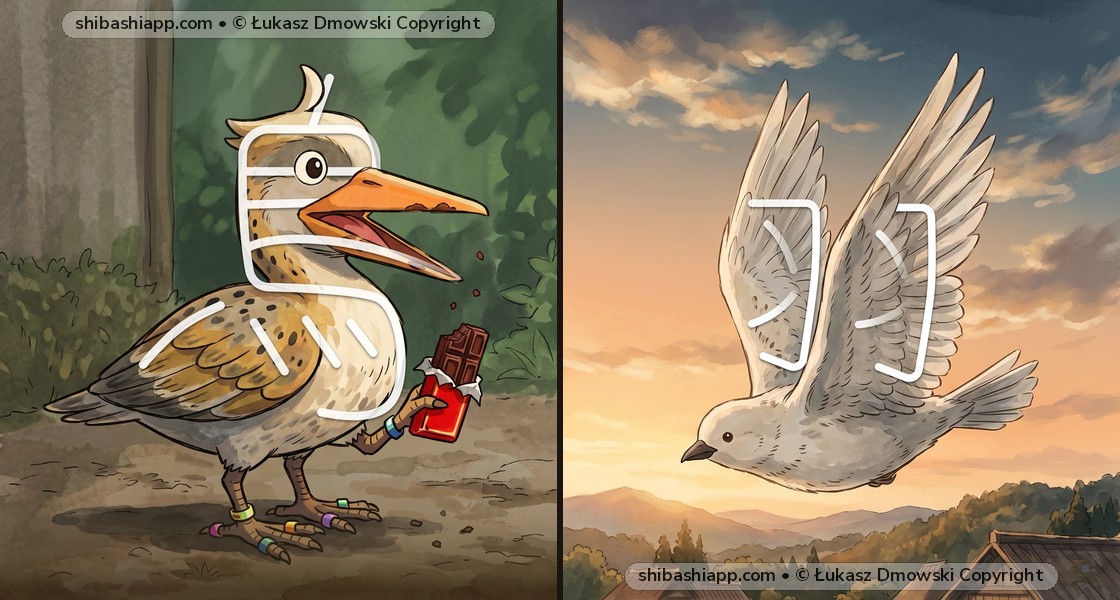
羽 (Two feathered Wings) on top + 白 (White little bird) at the bottom = flapping wings repeatedly to LEARN / PRACTICE (narau / shū). | 習う (ならう) — to learn |
| 白 — White | On: はく Kun: しろ |
日 (Sun) with a top ray tick = WHITE (shiro / haku). | 白 (しろ) — white |
| 曜 — Weekday | On: よう Kun: — |
日 (Sun) + 羽 (Wings) + 隹 (Bird) = winged bird of the sun = WEEKDAY (yō). | 日曜 (にちよう) — Sunday |
Side-by-Side Illustrated Kanji Flashcards (Tap Readings for Audio)
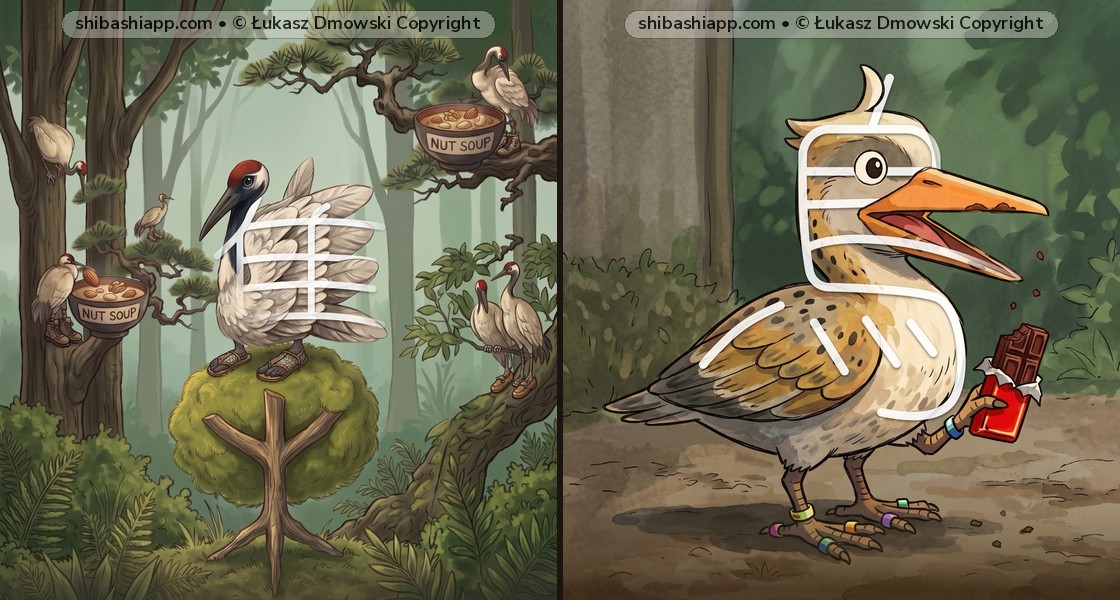
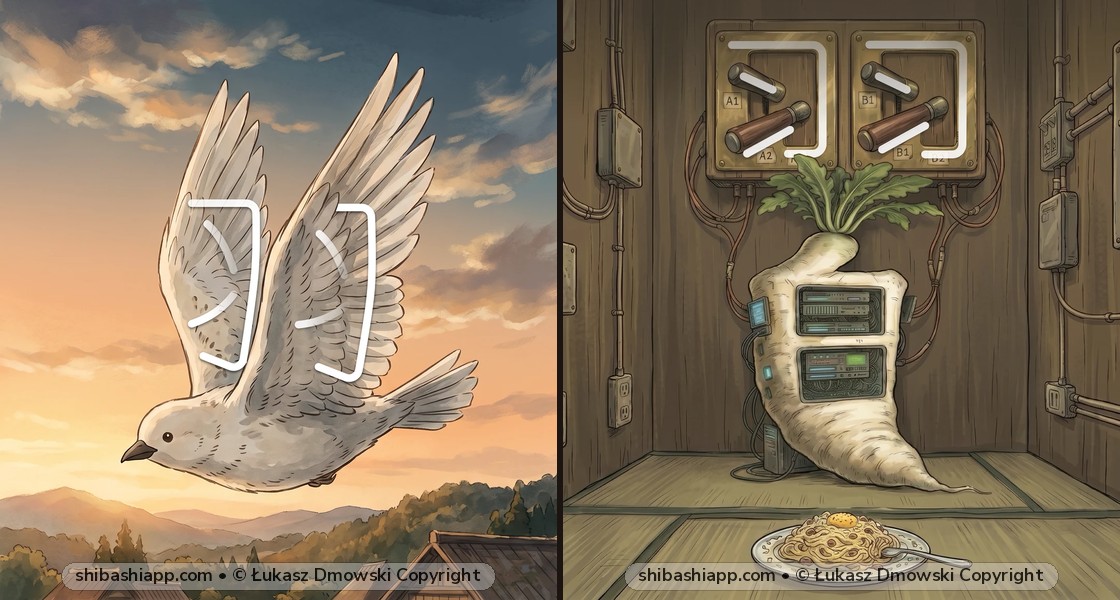
Compare the custom Shibashi artwork for 羽 (Feather) and 習 (Learn) below. Notice how each illustration embeds both the English meaning and the primary Japanese reading directly into the scene, and tap any reading to hear native pronunciation:


Step-by-Step Visual Breakdown & Radical Rules
Spot the feathered wings (羽) in both 習 and 曜:
1. 羽 (Feather) — Mnemonic Story & Readings
On'yomi: — | Kun'yomi: はね, は, わ
Shibashi Visual Story: “Wings full of feathers enabling flight, birds are our high neighbor (は or はね), watching (わ) everything from above...” Key visual distinction: Two symmetrical bird wings with feather ticks side-by-side = FEATHERS / WINGS / BIRD COUNTER (hane / wa).
2. 習 (Learn) — Mnemonic Story & Readings
On'yomi: しゅう | Kun'yomi: なら
Shibashi Visual Story: “Learning to fix issues (しゅう) with the white (白) radish server is quite the task. Get yourself a plate of carbonara (なら) and get to work...” Key visual distinction: 羽 (Two feathered Wings) on top + 白 (White little bird) at the bottom = flapping wings repeatedly to LEARN / PRACTICE (narau / shū).
- 習う (ならう): to learn
- 学習 (がくしゅう): study, learning
3. 白 (White) — Mnemonic Story & Readings
On'yomi: はく | Kun'yomi: しろ
Shibashi Visual Story: “She wrote (しろ) the code to hack-u (はく) the white radish server.” Key visual distinction: 日 (Sun) with a top ray tick = WHITE (shiro / haku).
4. 曜 (Weekday) — Mnemonic Story & Readings
On'yomi: よう | Kun'yomi: —
Shibashi Visual Story: “If it’s a weekday, you may be working at this new fancy Yogurt (よう) Headquarters...” Key visual distinction: 日 (Sun) + 羽 (Wings) + 隹 (Bird) = winged bird of the sun = WEEKDAY (yō).
- 日曜 (にちよう): Sunday
Essential Japanese Vocabulary Words Using 羽 / 習 / 白 / 曜
Once you can recognize 羽 (Feather) and 習 (Learn) and 白 (White) individually, lock them into your active reading vocabulary with these high-frequency Japanese words from the Shibashi app:
| Japanese Word | Hiragana Reading | English Meaning | Level |
|---|---|---|---|
| 羽 | はね | feather, wing, plume | JLPT |
| 一羽 | いちわ | one bird, one rabbit | JLPT |
| 二羽 | にわ | two birds, two rabbits | JLPT |
| 習う | ならう | to learn | JLPT |
| 学習 | がくしゅう | study, learning | JLPT |
| 白 | しろ | white | JLPT |
| 白い | しろい | white | JLPT |
| 日曜 | にちよう | Sunday | JLPT |
5-Second Memory Summary: How to Never Mix Up 羽 & 習 & 白 Again
羽 (Two Wings — hane / counter わ wa for birds & rabbits!) over 白 (White) = 習 (Learn/Practice by repetition — 習う narau, 練習 renshū, 復習 fukushū). Add 日 (Sun) and 隹 (Bird) to 羽 to get 曜 (Weekday — yō)!